A Collection of My Engineering Projects and Experiences
VEX Robotics – Competitive Robotics, Engineering Leadership, and Mentorship
Role: Team Captain, Lead Engineer, Builder, Driver, Mentor
Duration: 2013–2026
Experience: 8,000+ Hours
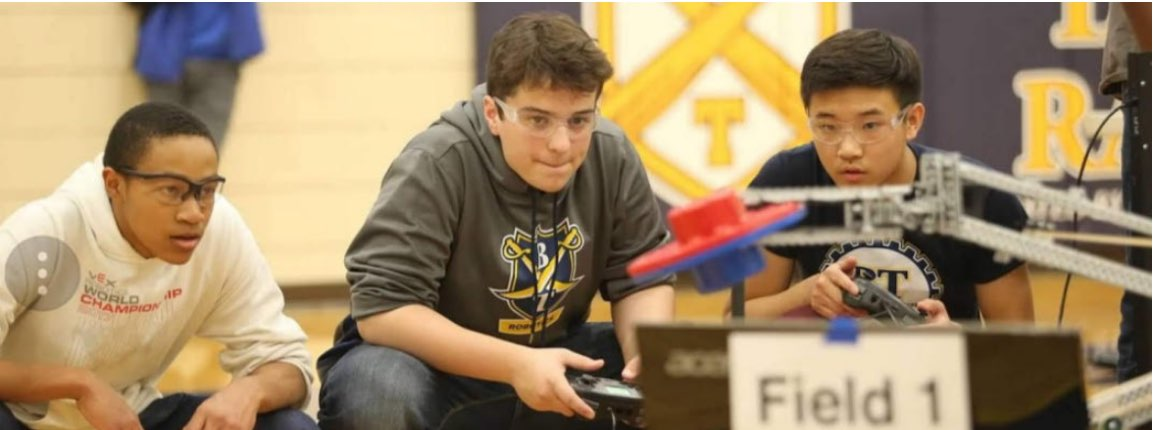
VEX Robotics served as the foundation of my engineering career and provided over a decade of hands-on experience in mechanical design, systems integration, automation, manufacturing, testing, and technical leadership. Throughout my competitive career, I accumulated more than 8,000 hours of experience designing, building, programming, and operating robots at the regional, national, and international levels.
As Team Captain and Lead Engineer, I was responsible for developing creative engineering solutions to annually changing game objectives. Each season required a complete redesign of the robot from the ground up, demanding rapid prototyping, iterative testing, design optimization, and strategic analysis. My responsibilities included mechanical design, drivetrain development, automation systems, manufacturing, competition strategy, and robot operation under high-pressure competitive conditions.
Over the course of my competitive career, I competed at the VEX Robotics World Championship and VEX Robotics U.S. Open in six of seven eligible seasons, earning numerous world-ranked achievements and international awards. Highlights include achieving the #1 Robot Skills ranking worldwide during the 2018 In The Zone season, earning a top-15 Driver Skills ranking globally, multiple worlds division semi-finals appearances, receiving the 2019 U.S. Open Amaze Award, and representing my team at the World Robotics Conference in Beijing, China.
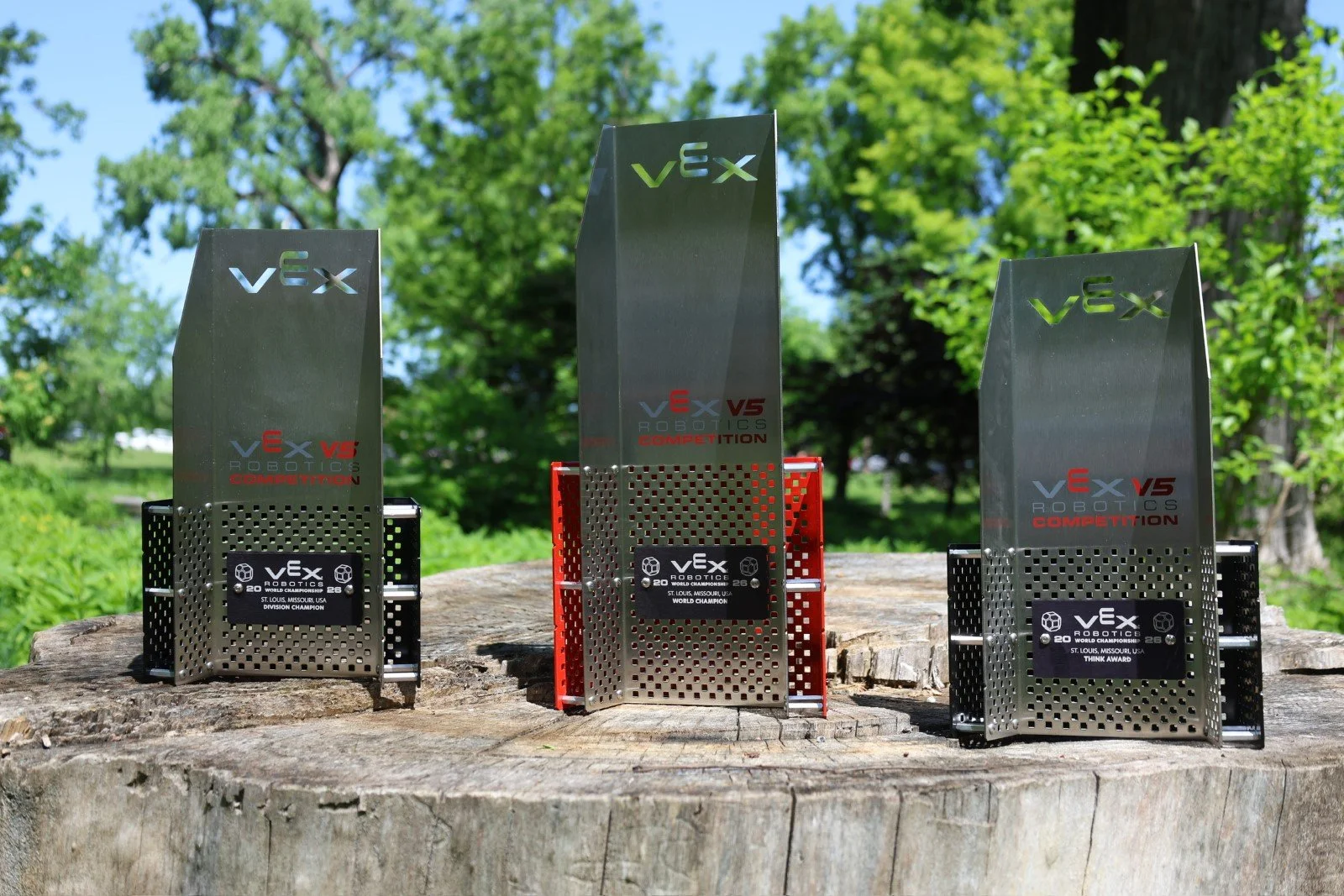
Beyond competition, I have remained actively involved in mentoring future generations of students. From 2020 through 2026, I served as a technical mentor for my younger brother's VEX Robotics team, Team 1028A — WASHED, providing engineering guidance on robot architecture, mechanism development, automation, and competition strategy. Leveraging my mechanical engineering background, I helped the team perform design trade studies and analyses involving dynamic loading, heat transfer, locomotion systems, automation, and game object interaction. During the 2025–2026 season, the team won the VEX Robotics World Championship, an achievement I was proud to support through engineering mentorship and strategic planning.
In 2024, I further expanded my involvement in robotics education by developing and proposing a VEXU-based senior design curriculum at the University of Colorado Boulder. The program was designed to provide students with a highly iterative, multidisciplinary engineering experience that exceeded traditional ABET accreditation requirements by integrating design, manufacturing, testing, project management, and competition-based validation into a single educational framework.
Key Achievements
8,000+ hours of competitive robotics experience.
Competed at the VEX Robotics World Championship and U.S. Open in 6 of 7 eligible seasons.
Achieved #1 Robot Skills ranking worldwide (2018 – In The Zone).
Achieved top-15 Driver Skills ranking worldwide (2018 – In The Zone).
Recipient of the 2019 U.S. Open Amaze Award.
Invited competitor at the 2017 World Robotics Conference in Beijing, China.
Developed proposal to restart a middle and high school VEX Robotics program (2013).
Developed a VEXU-based senior design curriculum at CU Boulder (2024).
Mentored the 2026 VEX Robotics World Championship-winning team.
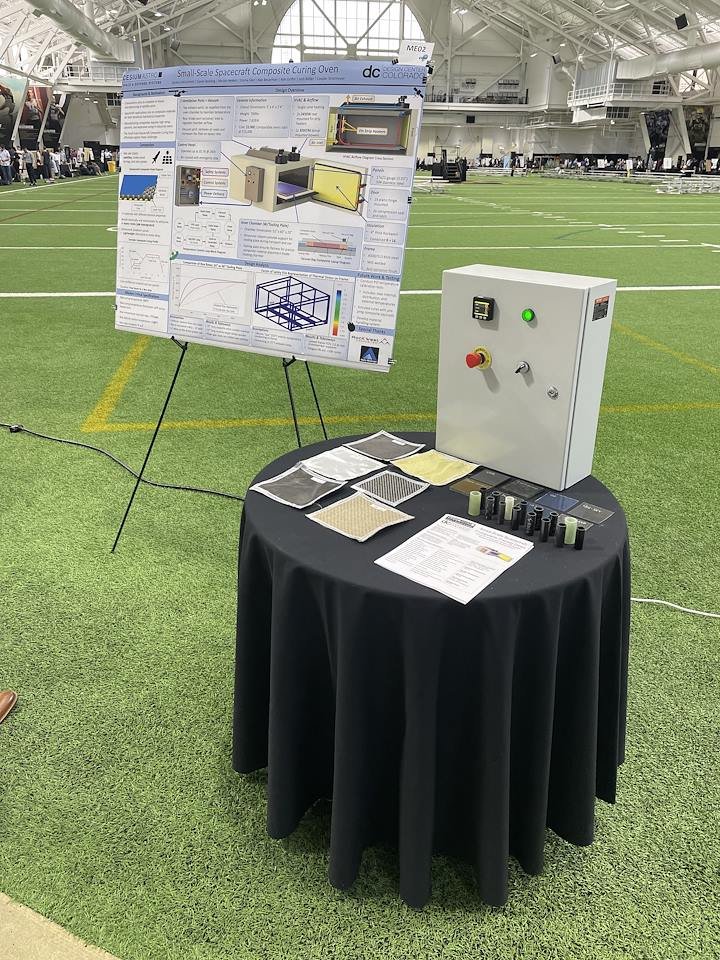
Small-Scale Spacecraft Composite Curing Oven
Client: CesiumAstro, Inc.
Role: Project Logistics Manager, Thermal Analysis Co-Lead, Lead Manufacturer/Welder
Duration: August 2023 – May 2024
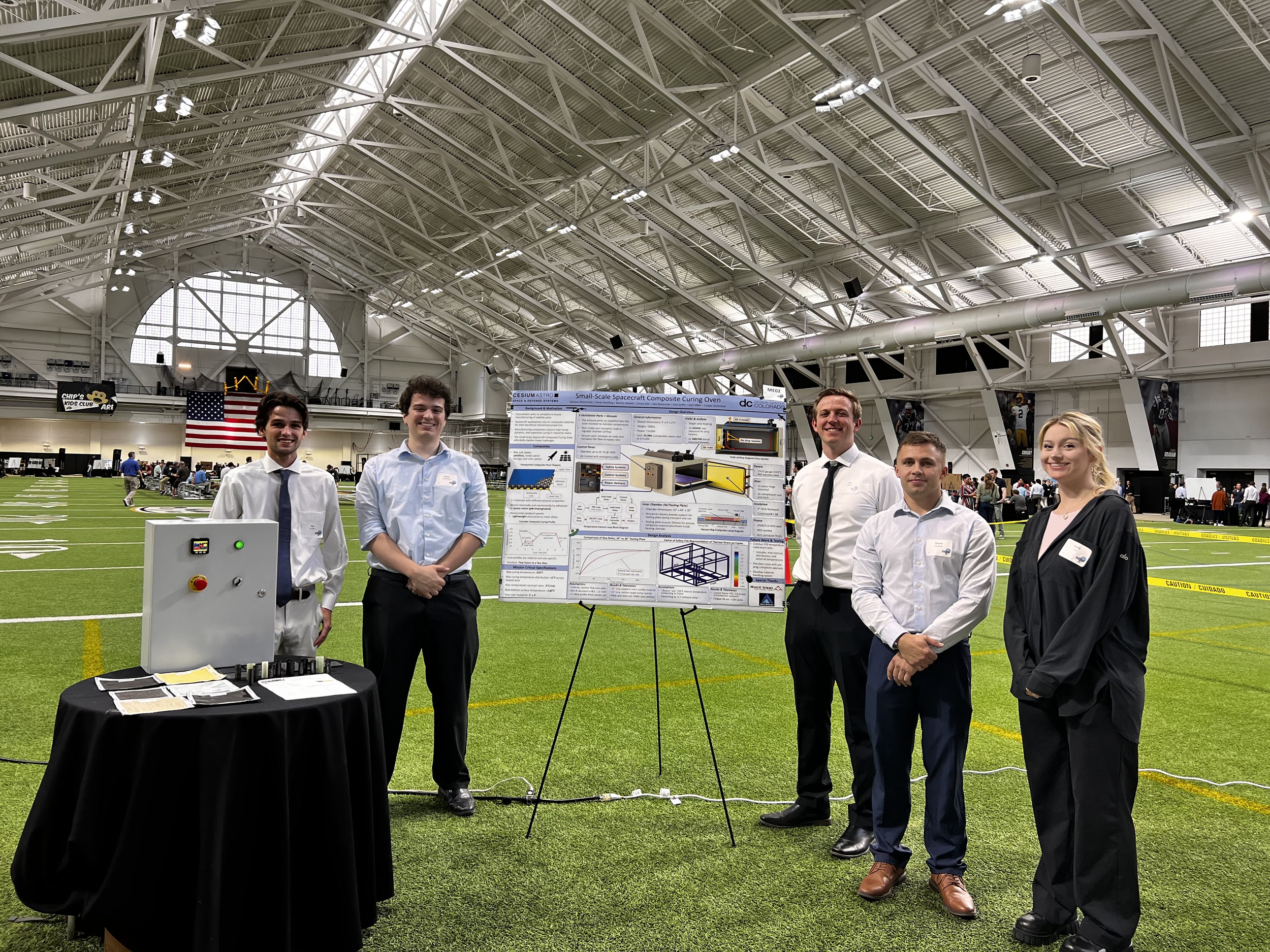
As part of the University of Colorado Boulder Mechanical Engineering Senior Design Program, my team partnered with CesiumAstro to design and develop a small-scale composite curing oven intended for spacecraft component manufacturing and research applications. The objective was to create a versatile, laboratory-scale thermal processing system capable of supporting a wide range of composite material cure schedules while maintaining temperature uniformity and operational flexibility.
Serving as Project Logistics Manager, Thermal Analysis Co-Lead, and Lead Manufacturer, I played a central role throughout the project's design, analysis, manufacturing, and client coordination phases. I acted as the primary liaison between the engineering team, faculty advisors, and industry stakeholders, organizing meetings, managing project documentation, coordinating schedules, and ensuring design requirements remained aligned with client expectations.
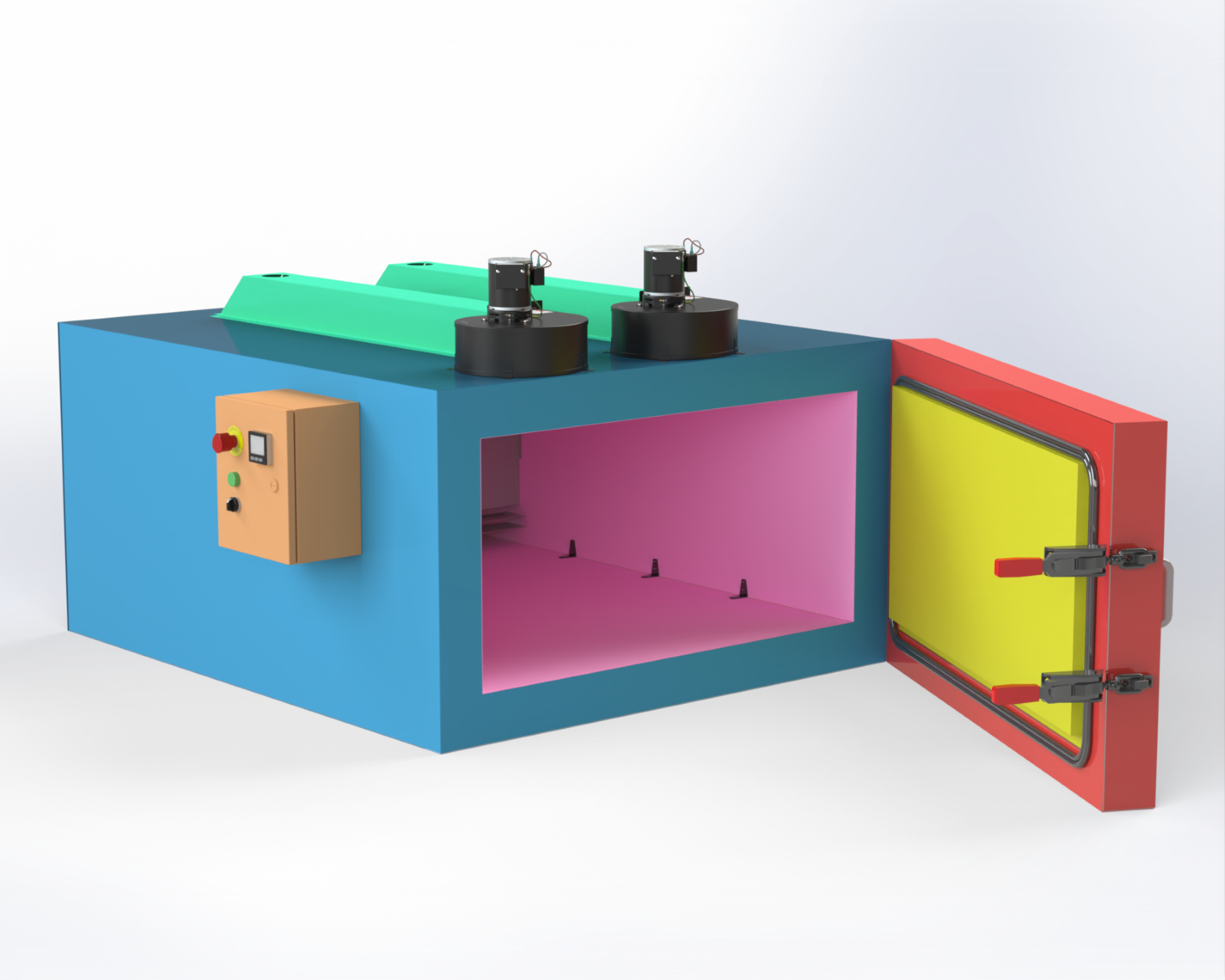
From a technical perspective, I led the development of thermal performance models used to evaluate heating requirements, heat transfer behavior, insulation strategies, and temperature distribution throughout the curing volume. Using analytical calculations and CAD-based design tools, our team iteratively refined the oven architecture to balance thermal performance, manufacturability, cost, and operational safety.
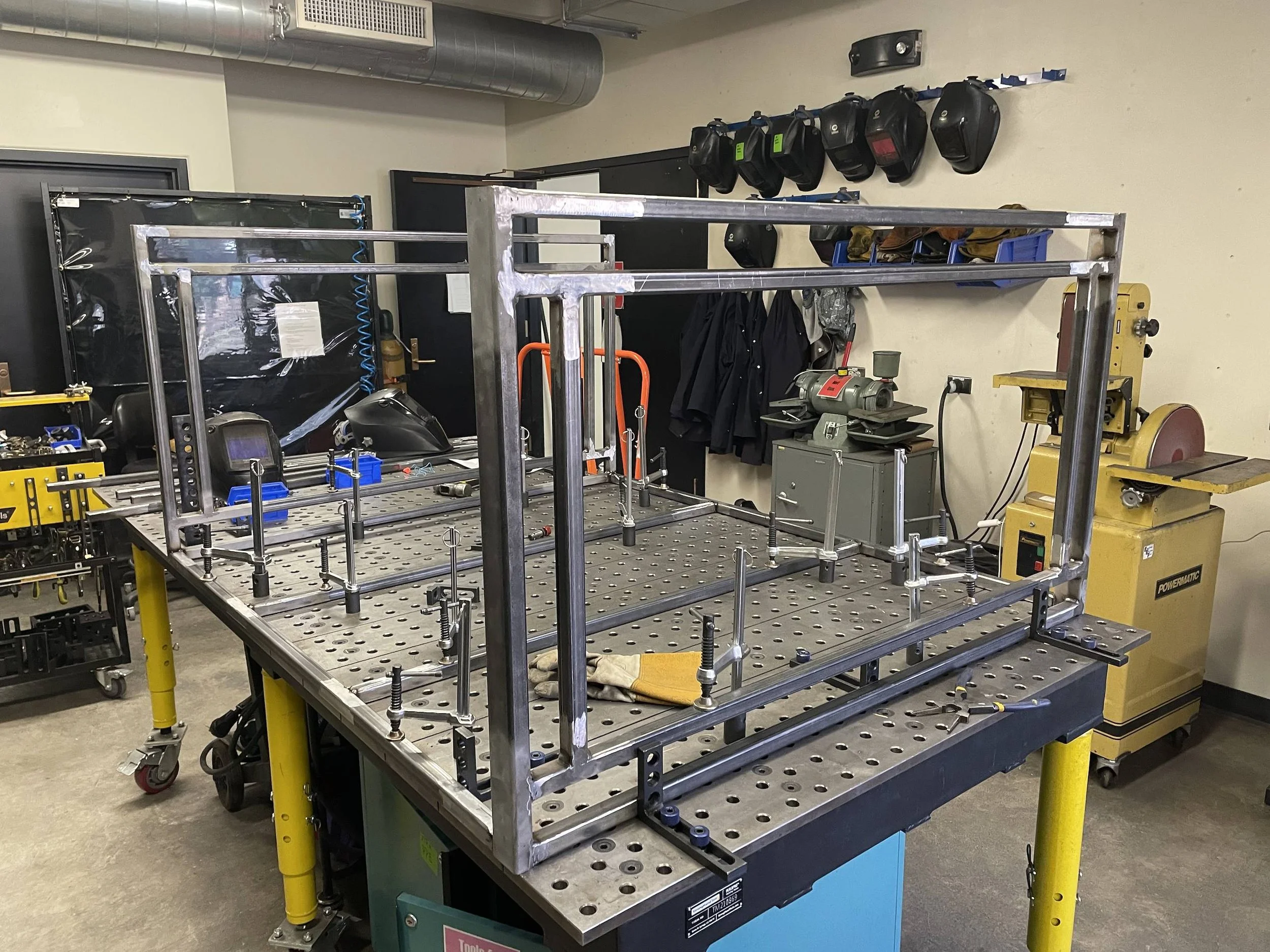
In addition to analysis and project management responsibilities, I served as the lead manufacturer and welder for the project. This included material procurement, fabrication planning, component manufacturing, structural assembly, welding operations, and system integration. The project provided valuable experience translating engineering analysis into a physical product while navigating the practical challenges associated with manufacturing large-scale hardware.
The resulting design was a 4ft×5ft×2.5ft single-zone electric curing oven capable of supporting a broad range of spacecraft composite materials and curing profiles. The system was designed to provide controlled thermal environments suitable for composite processing, materials research, and future aerospace manufacturing applications.
Technical Contributions
Thermal and heat transfer analysis.
Temperature uniformity modeling and validation.
CAD design and system architecture development.
Manufacturing planning and fabrication oversight.
Structural welding and assembly.
Project logistics and stakeholder coordination.
Technical documentation, user manuals, and design reviews.
Senior Design Expo presentation and client deliverables.
Discrete Analog Quarter-Car Suspension Model
Type: Personal Engineering Project
Duration: November 2024 – December 2024
This project explored the intersection of mechanical systems, control theory, and analog electronics by creating a physical electronic representation of a quarter-car suspension model. Rather than simulating vehicle dynamics entirely in software, the objective was to construct an analog computer capable of solving the governing differential equations in real time using electronic hardware.
The project began with the derivation of the coupled fourth-order differential equations describing a quarter-car suspension system. These equations were then converted into transfer functions and modeled digitally using MATLAB, Simulink, and LTSpice to establish baseline system behavior and performance characteristics.
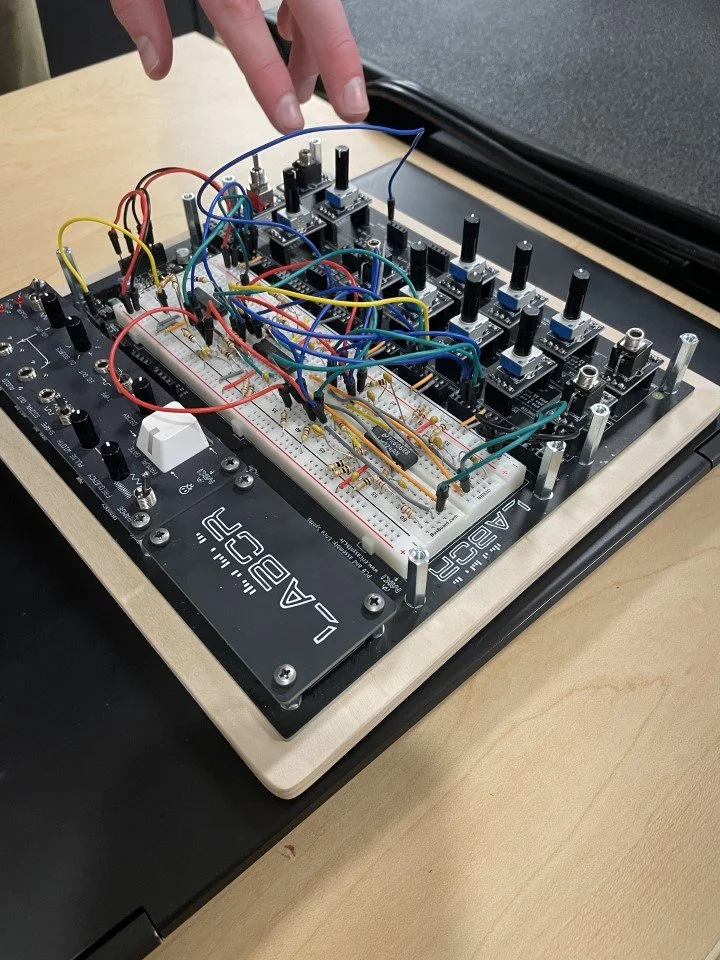
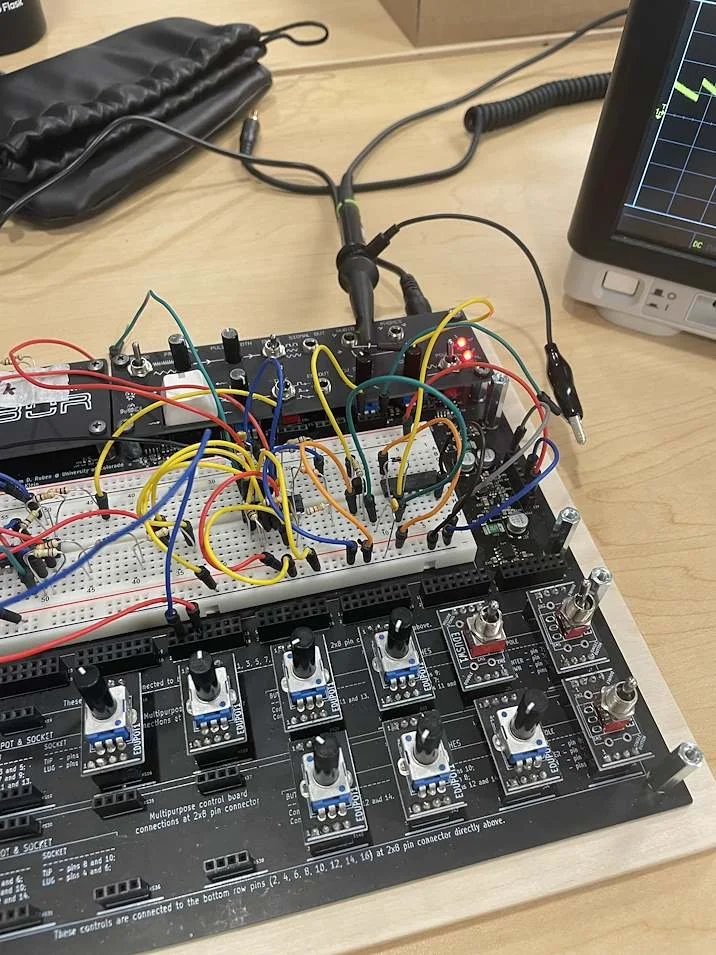
To create a physical analog representation of the system, I designed and assembled a network of cascading active integrator circuits using commercially available operational amplifiers and passive electronic components. By exploiting the mathematical relationship between integration and electrical voltage, the circuit continuously solved the suspension equations in real time, effectively transforming a mechanical dynamics problem into an analog electronic system.
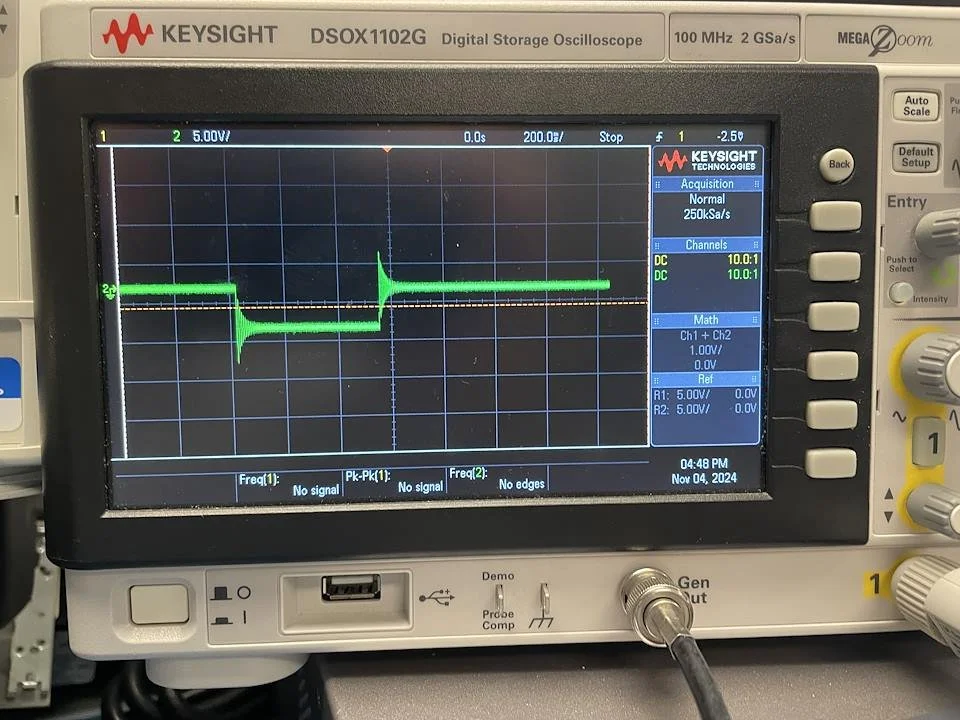
Once constructed, the circuit was tested using laboratory instrumentation including an oscilloscope, waveform generator, and digital multimeter. System responses to impulse and step inputs were recorded and compared against the corresponding MATLAB and Simulink simulations. Experimental results demonstrated strong agreement between the physical analog computer and the digital models, validating both the mathematical derivation and circuit implementation.
One of the most interesting aspects of the project was that suspension dynamics normally occur at frequencies too low for direct observation through sound. By appropriately scaling the system parameters, the circuit's outputs were shifted into the audible frequency range, allowing the dynamic response of a vehicle suspension system to be heard as well as measured. The project provided a unique demonstration of how physical systems, mathematical models, and electronic circuits can be used interchangeably to represent complex dynamic behavior.
Technical Contributions
Derivation of coupled fourth-order suspension differential equations.
Transfer function development and system modeling.
MATLAB and Simulink simulation.
LTSpice circuit design and verification.
Analog computer design using cascading active integrator circuits.
Experimental validation using laboratory instrumentation.
Frequency scaling of mechanical dynamics into the audible domain.
Comparison of physical and digital system responses.