Butterfly Nebula
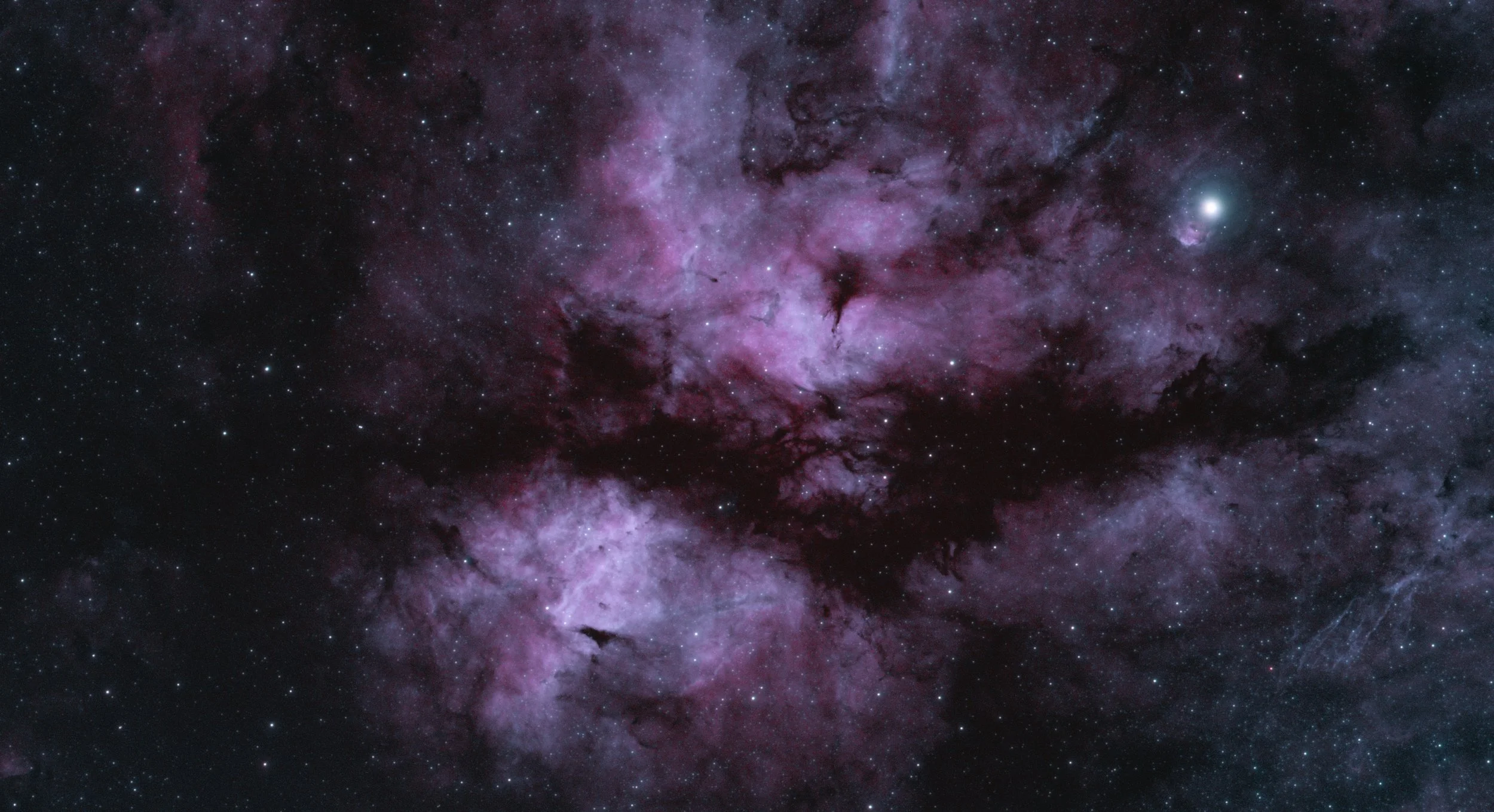
The Butterfly Nebula (IC 1318) is a vast emission nebula surrounding the brilliant star Gamma Cygni, better known as Sadr, a bright supergiant star, at the heart of the constellation Cygnus. Sadr (pictured on the right side of the image) is easily naked eye visible with a visible magnitude of 2.23. This makes it one of the first stars that appears in the summer night sky as the sun sets. Given is magnitude and proximity to other bright stars like Vega or Deneb, it is easily recognizable under nearly any skies. Located approximately 2,600 light-years from Earth, IC 1318 is part of the immense Cygnus X star-forming complex, where intense radiation from young, massive stars ionizes enormous clouds of hydrogen gas. Dark lanes of interstellar dust divide the glowing nebula into two prominent lobes, creating the distinctive butterfly-like appearance that gives the region its name. These dense clouds and ionization fronts are continuously sculpted by stellar radiation and powerful winds, producing the intricate filaments and ridges visible throughout the nebula.
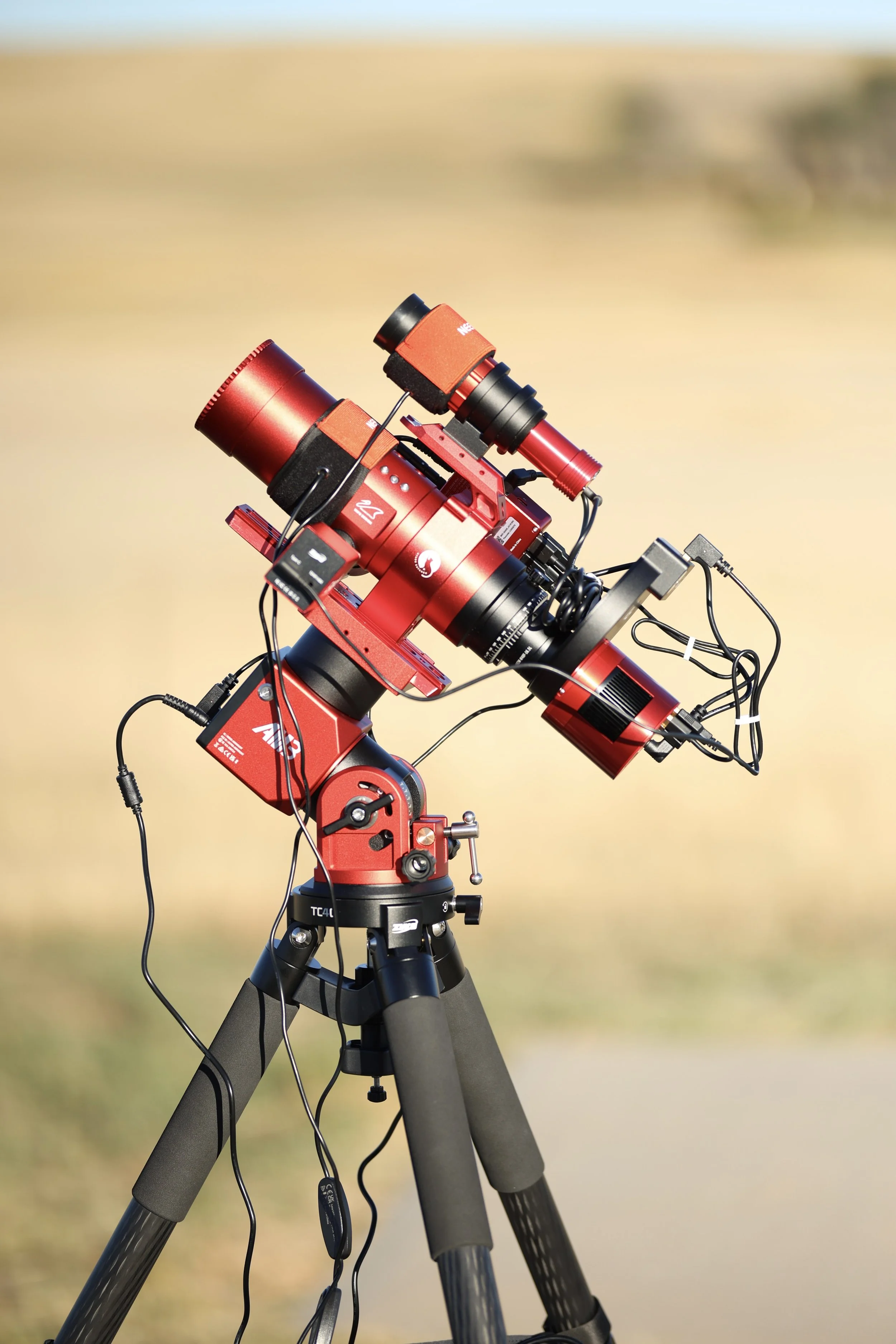
This image holds a special place in my astrophotography journey as one of the first images I captured with the RedCat 51 and one of my earliest attempts at deep-sky imaging with a dedicated telescope. It was originally intended as a test image to evaluate my image-capture sequence, establish a reliable acquisition workflow, and begin learning the fundamentals of processing. The dataset consists of only six hours of narrowband exposure, three hours each of hydrogen-alpha (Ha) and sulfur (SII)—providing a relatively small signal base compared with the lengthy integrations I tend to work with now.
As one of my first telescope images, there is considerable room for improvement in both acquisition and processing. The Butterfly Nebula remains high on my list of targets to revisit, where significantly more integration time with additional filter channels and more careful processing should reveal the faint filamentary structures and rich, low-surface-brightness emission that are only hinted at in this initial attempt.
Data were collected from:
- Boulder - B4/B5
Integration:
Sii: 60×180s (3hr)
Ha: 60×180s (3hr)
Total: 6hr
Equipment:
Telescope: William Optics RedCat51
Camera: ZWO ASI585MM Pro Monochrome CMOS camera
Mount: ZWO AM3
Filters: 7nm Narrowband Sulfur-ii, and Hydrogen-Alpha
Stacked and processed entirely in Pleiades Astrophoto PixInsight