Andromeda Galaxy — Close Up & Widefield
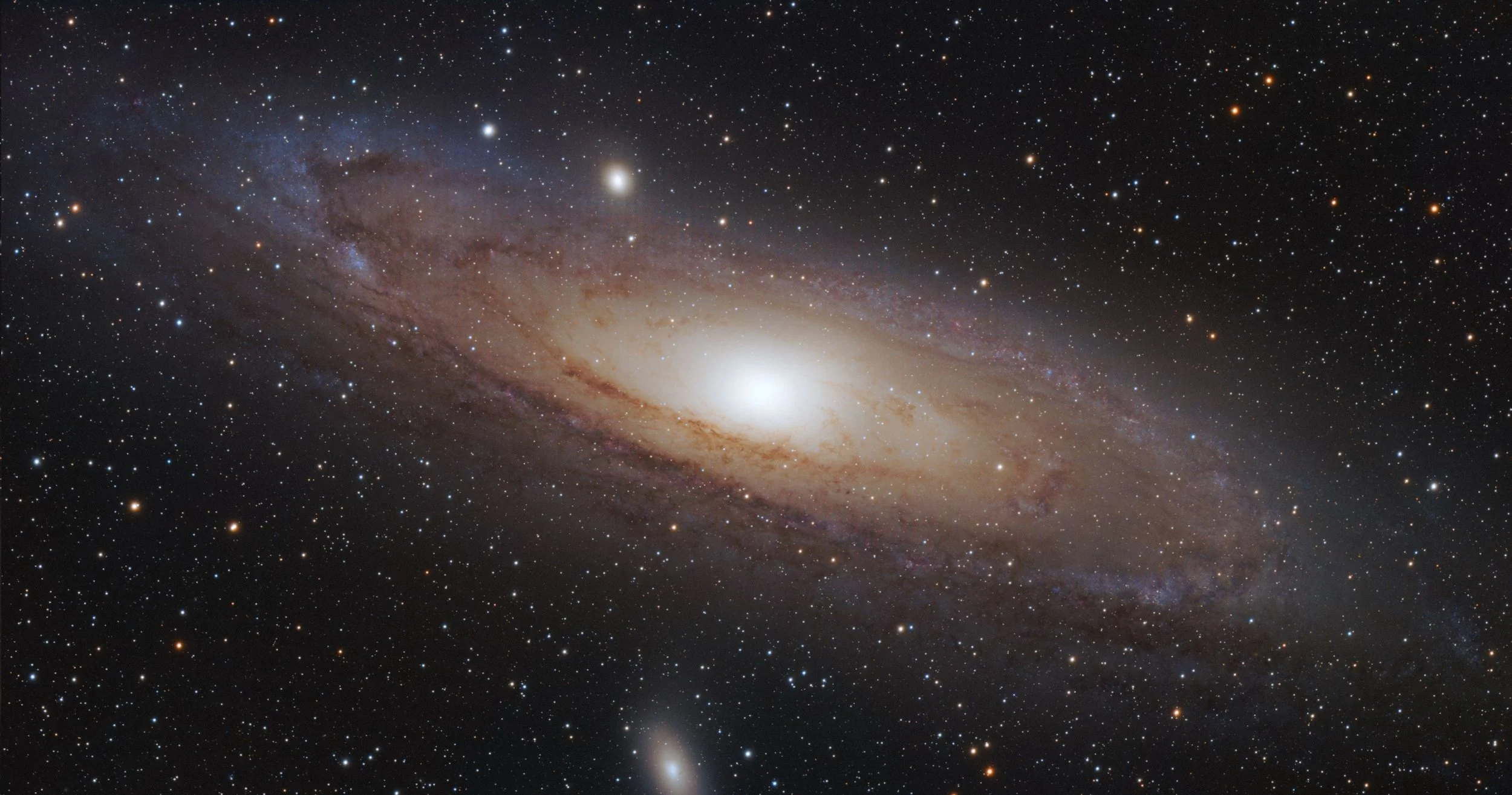
The Andromeda Galaxy (M31) is the nearest major spiral galaxy to the Milky Way, located approximately 2.5 million light-years from Earth in the constellation Andromeda. Spanning an estimated 220,000 light-years in diameter and containing roughly one trillion stars, it is the largest galaxy in the Local Group and about 2 times larger than the Milky Way. Its bright central bulge is composed primarily of older, evolved stars, while graceful spiral arms rich in gas and dust host active regions of ongoing star formation. Dark lanes of interstellar dust weave through the galaxy's disk, silhouetted against billions of distant stars and tracing the spiral structure that defines this idealized galaxy.
Accompanying M31 are two prominent satellite galaxies visible in this image. M32, the compact elliptical galaxy nestled against Andromeda's disk, likely bears the scars of billions of years of gravitational interaction with its host. Farther from the galactic core lies M110, a dwarf elliptical galaxy whose diffuse appearance contrasts sharply with the dense stellar population of M32. Together, these companions offer a glimpse into the hierarchical nature of galaxy formation, where large galaxies gradually grow through the accretion and interaction of smaller neighbors.
Unlike emission nebulae, whose vivid colors arise from glowing ionized gas, the Andromeda Galaxy shines primarily through the combined light of its stellar population. This LRGB image combines a luminance channel with separate red, green, and blue exposures to preserve both fine structural detail and natural color. The yellow-white nucleus is dominated by older, cooler stars, while subtle blue hues trace young, hot star clusters embedded within the spiral arms. The prominent dark dust lanes absorb and scatter starlight, revealing vast reservoirs of cold molecular material that continue to fuel future generations of star formation.
Although the light captured in this image began its journey toward Earth roughly 2.5 million years ago, it represents only a brief moment in the history of Andromeda. The Milky Way and Andromeda are slowly approaching one another and are expected to begin merging in about 4.5 billion years. I’ve heard its on a Tuesday, mark your calendars. Rather than a catastrophic collision between stars, this event will be a gradual gravitational interaction that reshapes both galaxies into a single, larger system, offering a glimpse into the long-term evolution of galaxies throughout the universe.
Data were collected from:
- Boulder - B4/B5
- Kline-Dodge Dark Site (DAS) - B3.
Integration:
L: 360×60s (6hr)
R: 60×120s (2hr)
G: 60×120s (2hr)
B: 60×120s (2hr)
Total: 12hr
Equipment:
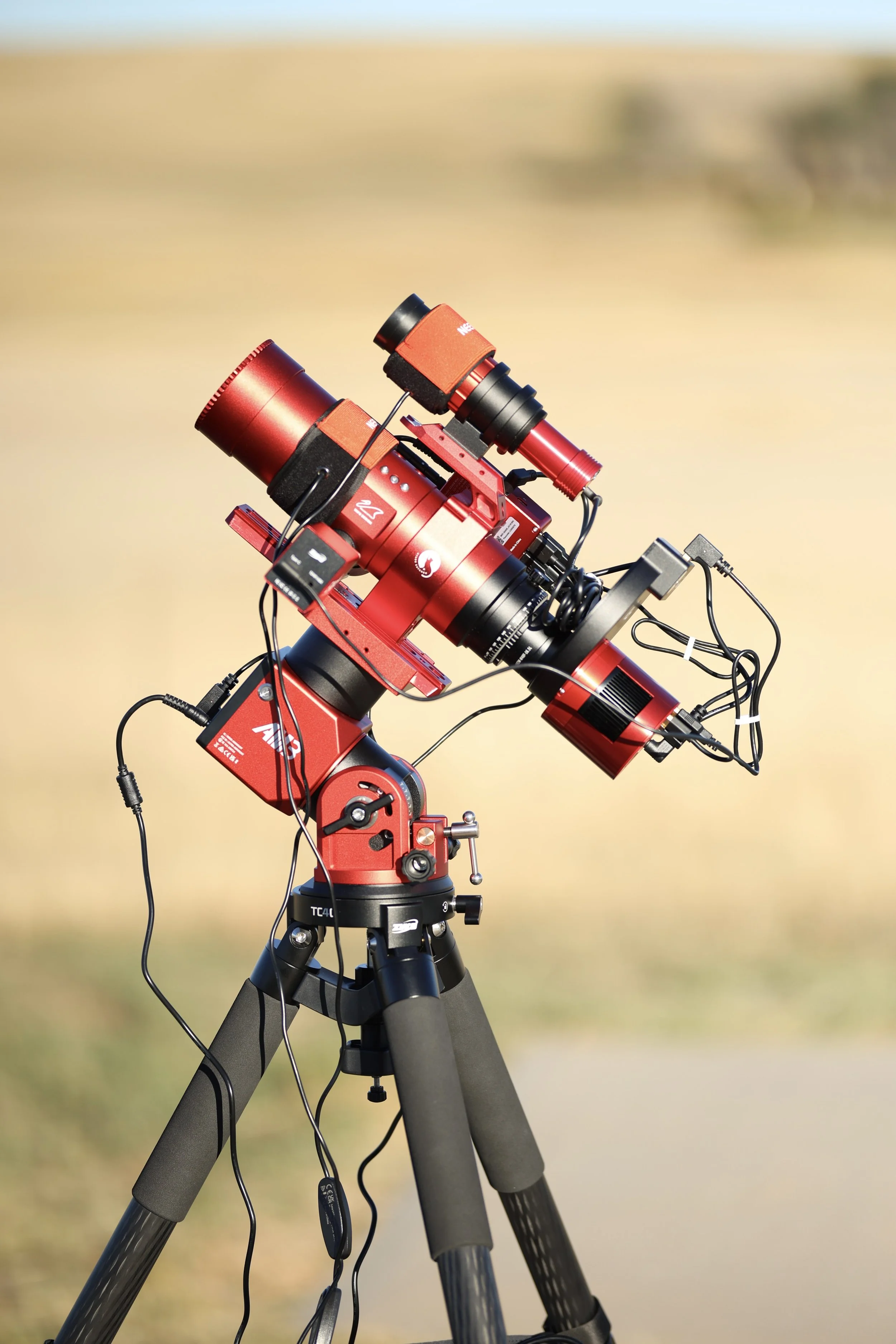
Telescope: William Optics RedCat51
Camera: ZWO ASI585MM Pro Monochrome CMOS camera
Mount: ZWO AM3
Filters: Broadband LRGB
Stacked and processed entirely in Pleiades Astrophoto PixInsight
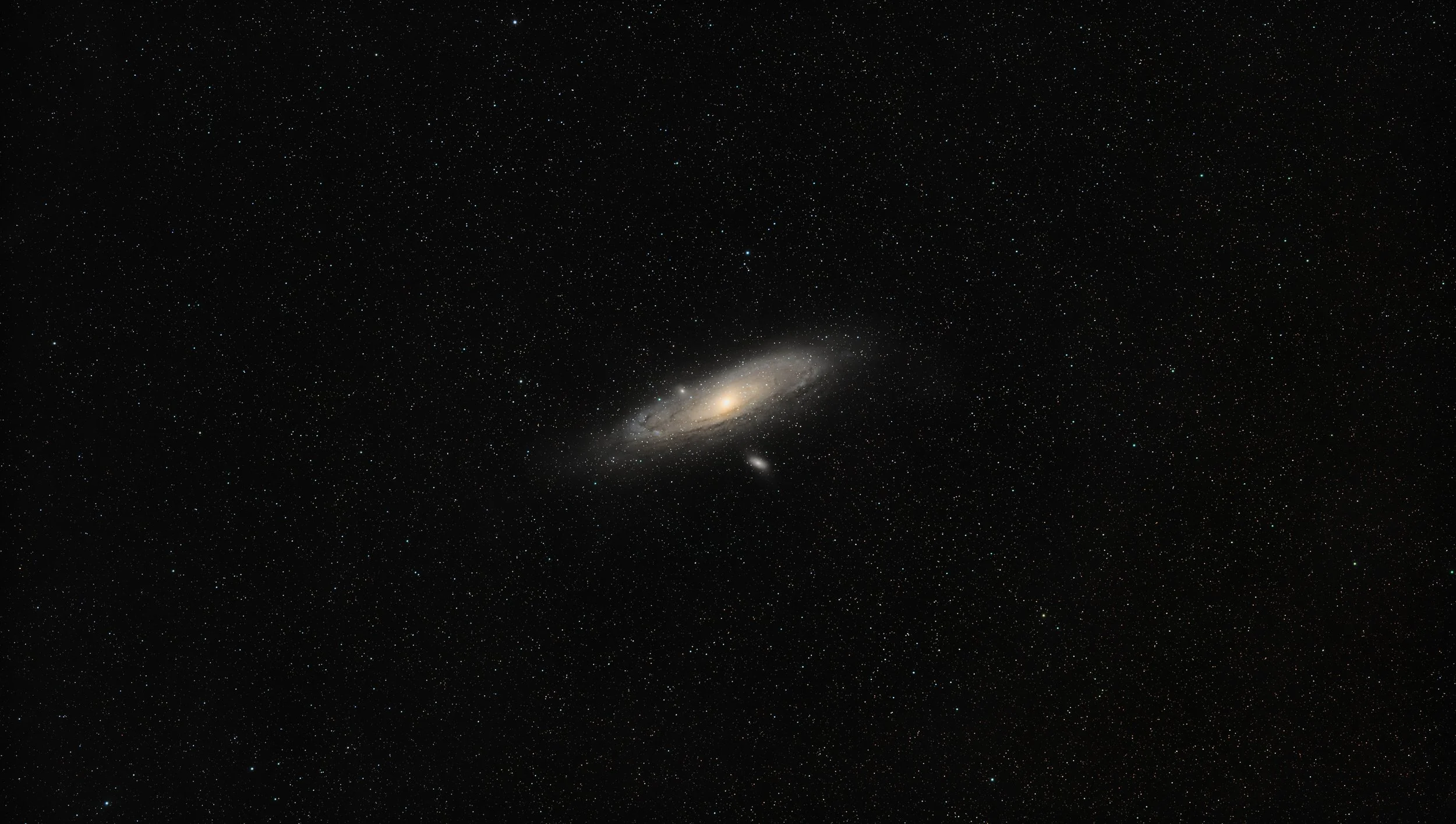
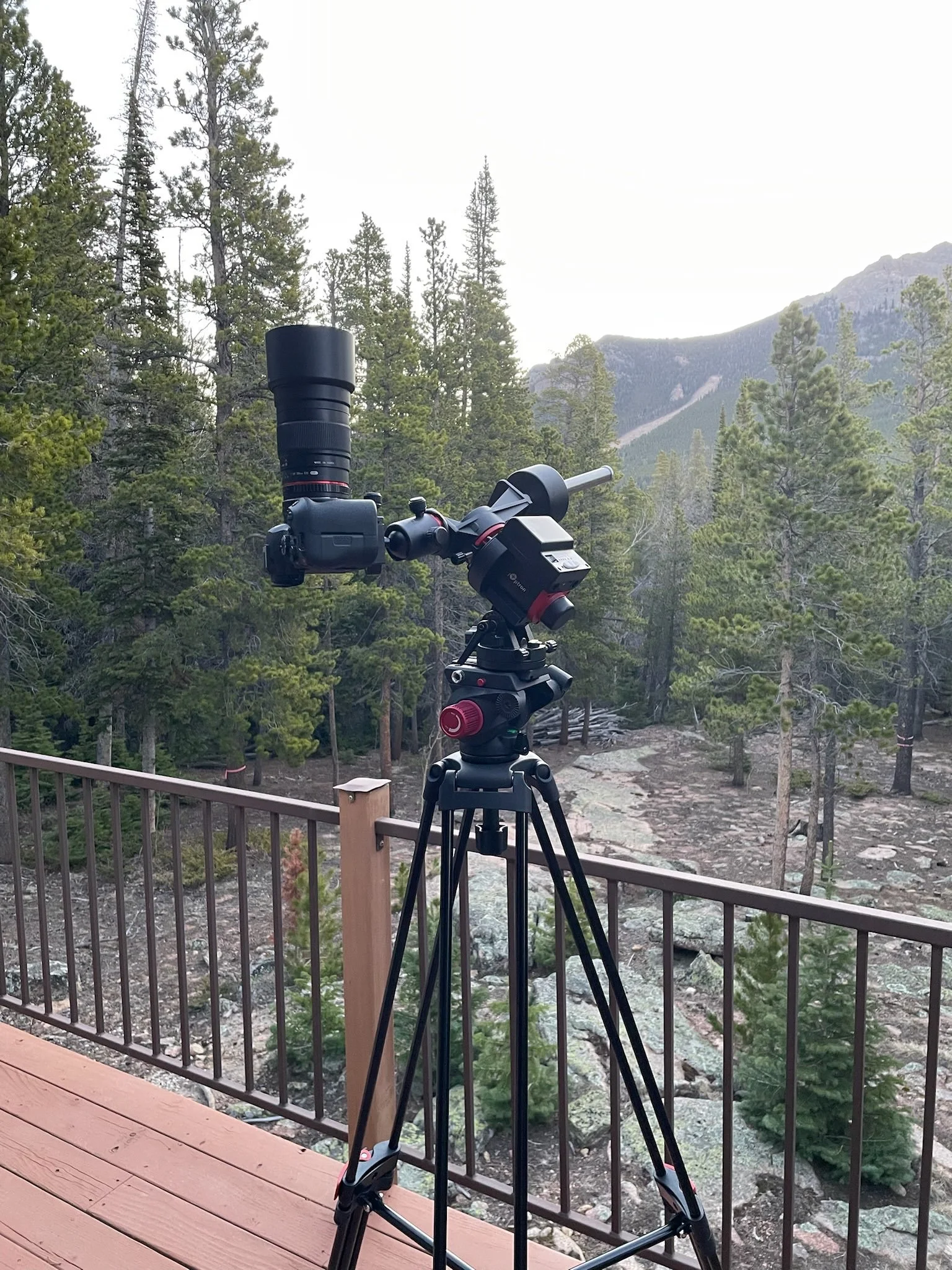
While Galaxies are often associated with long-focal-length telescopes, the Andromeda Galaxy is actually best captured with shorter focal length instruments. This image was captured with a stock Canon R6Mii mirrorless camera and a 135mm lens mounted on a portable star tracker, demonstrating that deep-sky astrophotography does not always require large telescopes or specialized equipment. Pictured on the right, the only piece of gear that separates this rig from a traditional photography rig is an inexpensive star tracker. At this focal length, the galaxy fits nicely in the center of the frame while still preserving its cosmic surroundings, revealing the full extent of its sprawling disk, prominent dust lanes, and bright stellar core.
The Andromeda Galaxy is one of the few deep-sky objects visible to the unaided eye. Under moderately dark skies, it appears as a soft, elongated patch of light stretching across the constellation Andromeda. Despite being more than 2.5 million light-years away, its immense size and the combined light of roughly one trillion stars make it the most distant object that many people can see without optical aid. For countless observers, it serves as a first glimpse beyond our own Milky Way, offering the remarkable realization that the faint smudge overhead is an entire galaxy in its own right.
Its enormous apparent size also makes Andromeda a unique telescopic target. Extending more than six times the diameter of the full Moon, the galaxy is far too large to fit within the field of view of many high-magnification telescopes. Instead, it is best appreciated at low magnification or with wide-field optics, where its expansive spiral disk and satellite galaxies can be viewed together. For this reason, M31 is also one of the finest binocular objects in the night sky. Even from locations with mediocre observing conditions, a pair of ordinary binoculars readily reveals its bright central bulge and elongated disk, making it one of the most rewarding deep-sky objects for both beginners and experienced observers alike.
Data were collected from:
- Kline-Dodge Dark Site (DAS): B3
Integration:
Total: 4hr
Equipment:
Telescope: Rokinon 135mm F/2 EF lens
Camera: Canon EOS R6 Mark II, stock — no astro modification
Mount: IOptron SkyGuider-Pro Right Ascension Manual Star Tracker.
Filters: None, captured in natural true color OSC broadband
Processed entirely in Pleiades Astrophoto PixInsight