Crescent Nebula & Friends
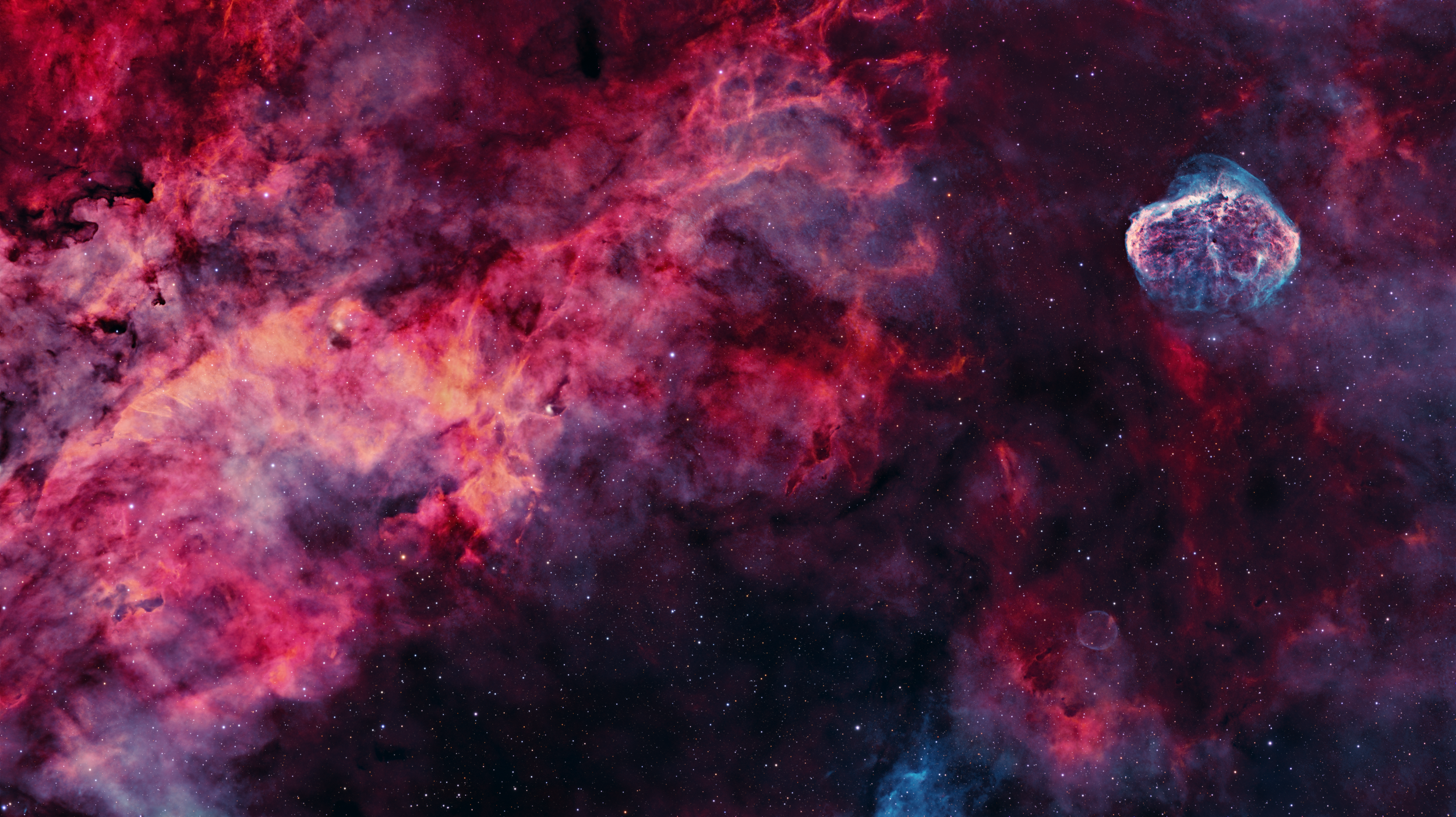
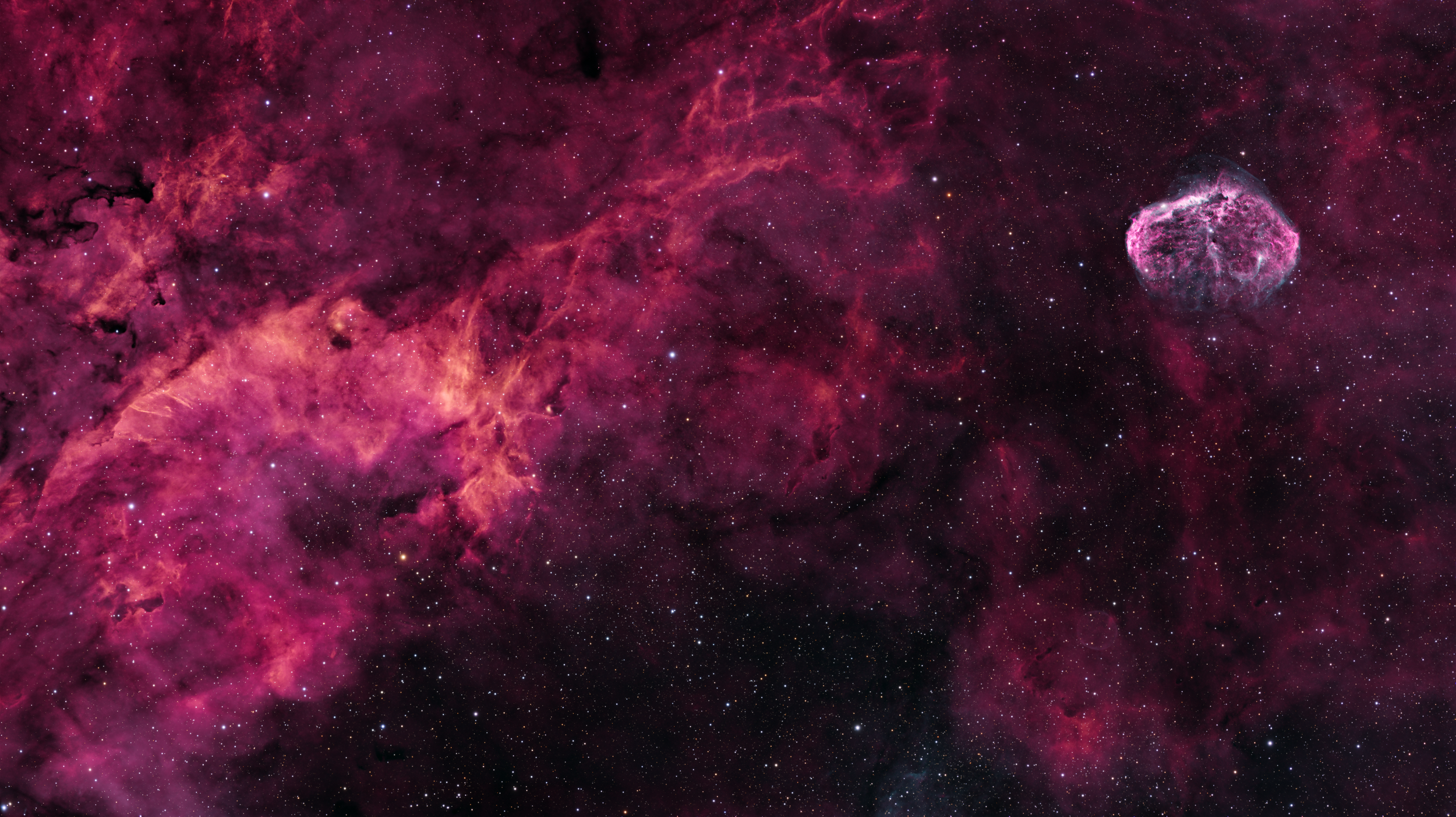
The Crescent Nebula (NGC 6888) is an emission nebula in the constellation Cygnus, located approximately 5,000 light-years from Earth. Visible in the upper-right third of this image, the nebula was discovered by William Herschel in 1792. Its distinctive crescent shape is sculpted by the powerful stellar winds of the Wolf–Rayet star WR 136, which is plowing through surrounding gas and dust while its intense ultraviolet radiation ionizes the material, causing it to glow.
Although the Crescent Nebula can be observed visually with even modest amateur telescopes, an Oxygen III (OIII) filter greatly enhances its visibility by isolating the nebula's strong oxygen emission. Just below NGC 6888 in the image lies the Soap Bubble Nebula (PN G75.5+1.7, also known as Ju 1), an extraordinarily faint planetary nebula. A planetary nebula is one of the greater misnomers in astronomy. Having nothing to do with planets other than sometimes being planet shaped (spherical), planetary nebulae are the glowing shells of gas and dust ejected by a dying, medium-sized star near the end of its life. Unlike the bright Crescent, the Soap Bubble emits almost exclusively in OIII and requires many hours of dedicated narrowband imaging under dark skies to reveal its delicate shell. Its extreme faintness explains why it remained undiscovered until 2007.
This image is the result of 30 hours and 45 minutes RGB-SHO exposures acquired over multiple nights from several observing locations across Colorado, ranging from Bortle 1 to Bortle 5 skies.
Data were collected from:
- Boulder - B4/B5
- Starry Meadows (RMSS) - B1
- Estes Park - B3/B4
- Kline-Dodge Dark Site (DAS) - B3.
Integration:
R: 30x120s (1hr)
G: 30x120s (1hr)
B: 30x120s (1hr)
Sii: 97x300s (8hr5m)
Ha: 91x300s (7h35m)
Oiii: 145x300 (12h5m)
Total: 30h45m
Equipment:
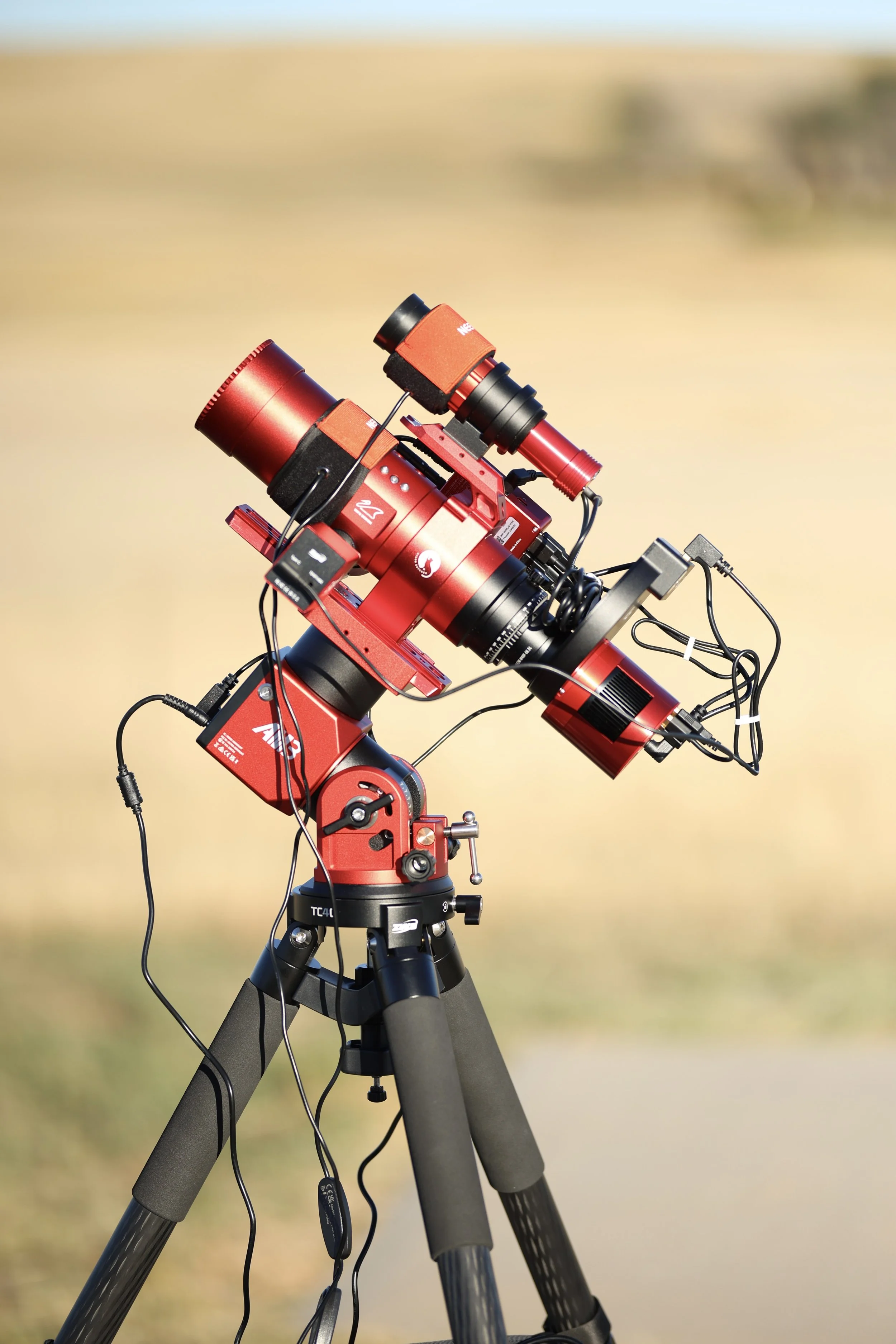
Telescope: William Optics RedCat51
Camera: ZWO ASI585MM Pro Monochrome CMOS camera
Mount: ZWO AM3
Filters: Broadband RGB, 7nm Narrowband Sulfur-ii, Hydrogen-Alpha, and Oxygen-iii
Stacked and processed entirely in Pleiades Astrophoto PixInsight